
Carpal Tunnel Syndrome (CTS)

Carpal Tunnel Syndrome (CTS)
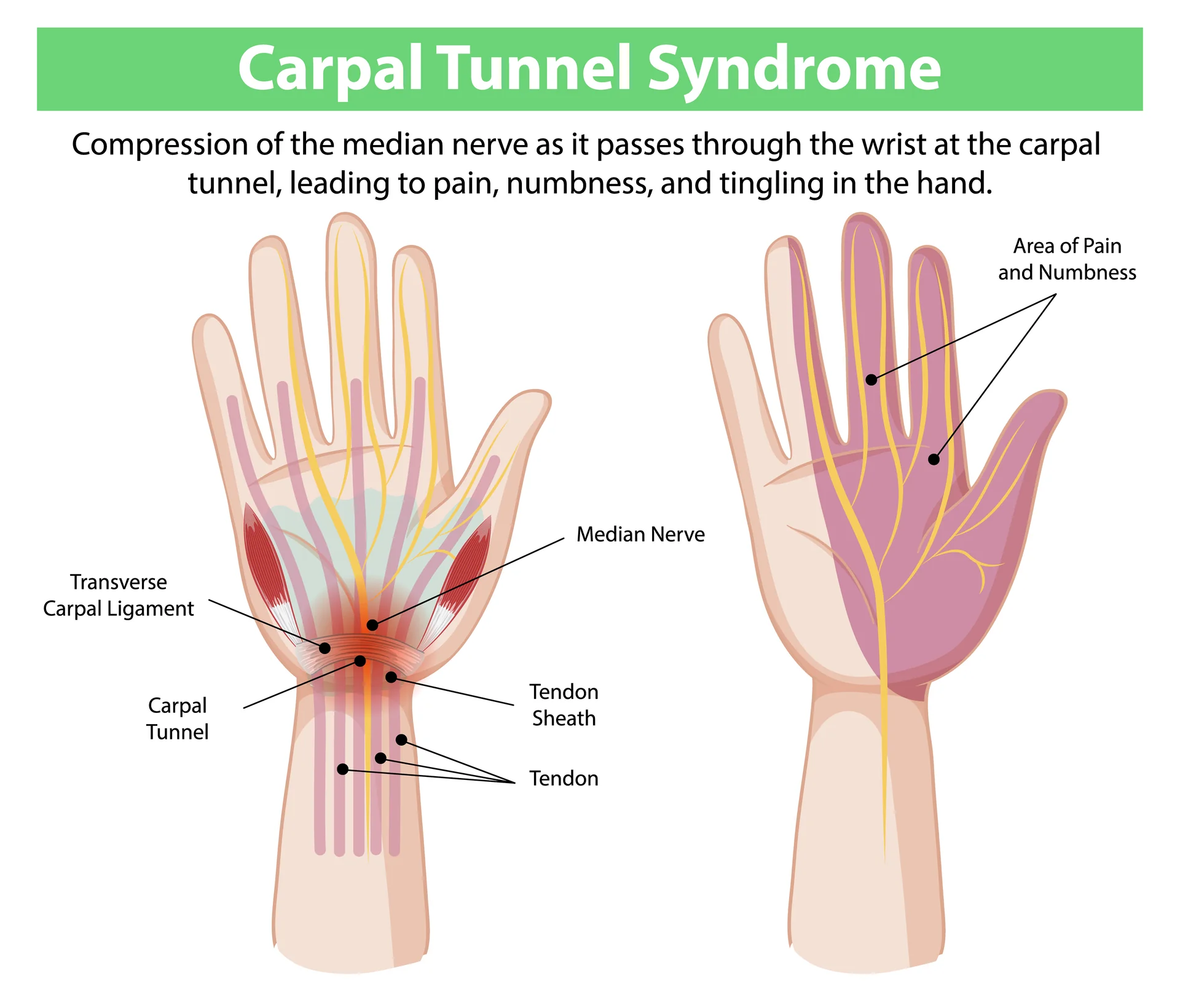
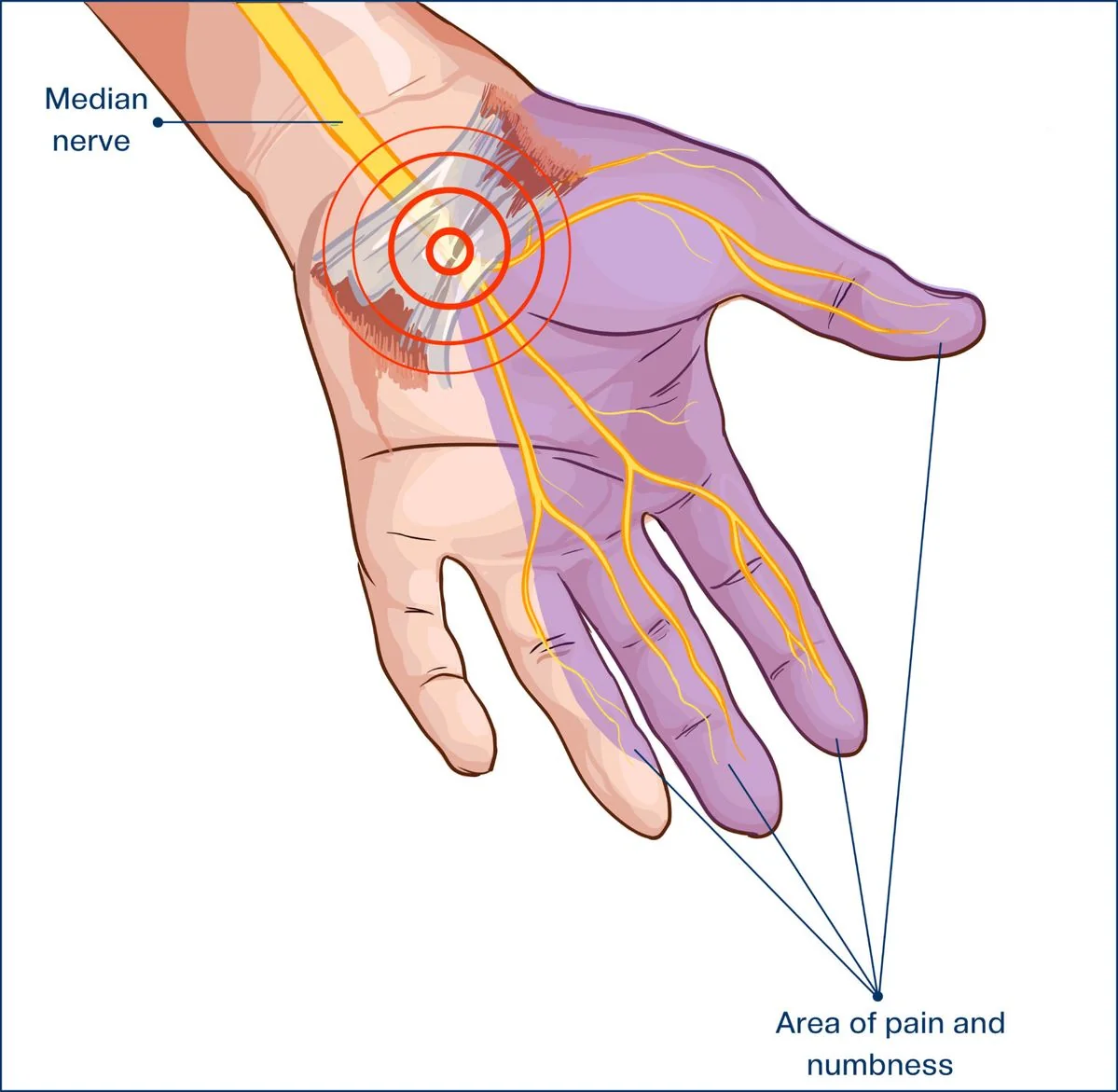
Carpal Tunnel Syndrome (CTS) is a condition caused by compression of the median nerve at the wrist as it passes through a narrow passage called the carpal tunnel. This nerve provides sensation to the thumb, index finger, middle finger and part of the ring finger, and supplies some muscles at the base of the thumb. Compression of the nerve can cause numbness, tingling, pain and, in advanced cases, weakness of the hand. Symptoms may initially occur at night and gradually interfere with daily activities such as writing, driving, holding a phone or gripping objects.
Diagnosis
1. Clinical examination
- Tinel's sign: Tapping over the median nerve at the wrist may reproduce tingling in the fingers.
- Phalen's test: Holding the wrists in a flexed position may reproduce symptoms.
- Sensory examination: Assessment of sensation in the fingers.
- Motor examination: Assessment of thumb strength and muscle wasting at the base of the thumb.
2. Nerve conduction study (NCS) and Electromyography (EMG):
To determine the location and severity of nerve compression.
3. Ultrasound:
To demonstrate enlargement of the median nerve and identify certain structural abnormalities around the carpal tunnel.
4. MRI
Generally, not required but may be considered when atypical symptoms or uncertain diagnosis.
Treatment
Treatment depends on symptom severity, duration, clinical findings and evidence of nerve damage.
1. Conservative treatment
a. Wrist splint:
Wearing a wrist splint at night keeps the wrist in a neutral position and can reduce pressure on the median nerve.
b. Activity modification:
Reduce repetitive forceful gripping and prolonged wrist flexion or extension. Adjust workstations and take regular breaks from aggravating activities.
c. Exercises and hand therapy:
Gentle median nerve-gliding and tendon-gliding exercises may be considered in selected patients.
d. Medications:
Pain relievers may help associated pain temporarily but do not remove the underlying nerve compression.
2. Interventional pain management
a. Corticosteroid injection into the carpal tunnel:
helps relieve pain, numbness and tingling caused by Carpal Tunnel Syndrome. The injection helps reduce inflammation and swelling around the median nerve, easing pressure within the carpal tunnel. This minimally invasive treatment may provide symptom relief and improve hand function, potentially delaying or avoiding surgery in selected patients.
b. Median nerve hydro dissection:
It intended to separate the median nerve from surrounding tissues may be offered in some settings. It may be considered in selected patients.
At AREVA
At AREVA, we offer advanced, minimally invasive treatment options for Carpal Tunnel Syndrome to relieve pain, numbness and tingling caused by median nerve compression at the wrist. Treatment may include corticosteroid injections to reduce inflammation and alleviate symptoms. Our personalised approach aims to improve hand function, enhance comfort and help patients return to their daily activities.