
Shoulder Pain & Frozen Shoulder

SHOULDER PAIN
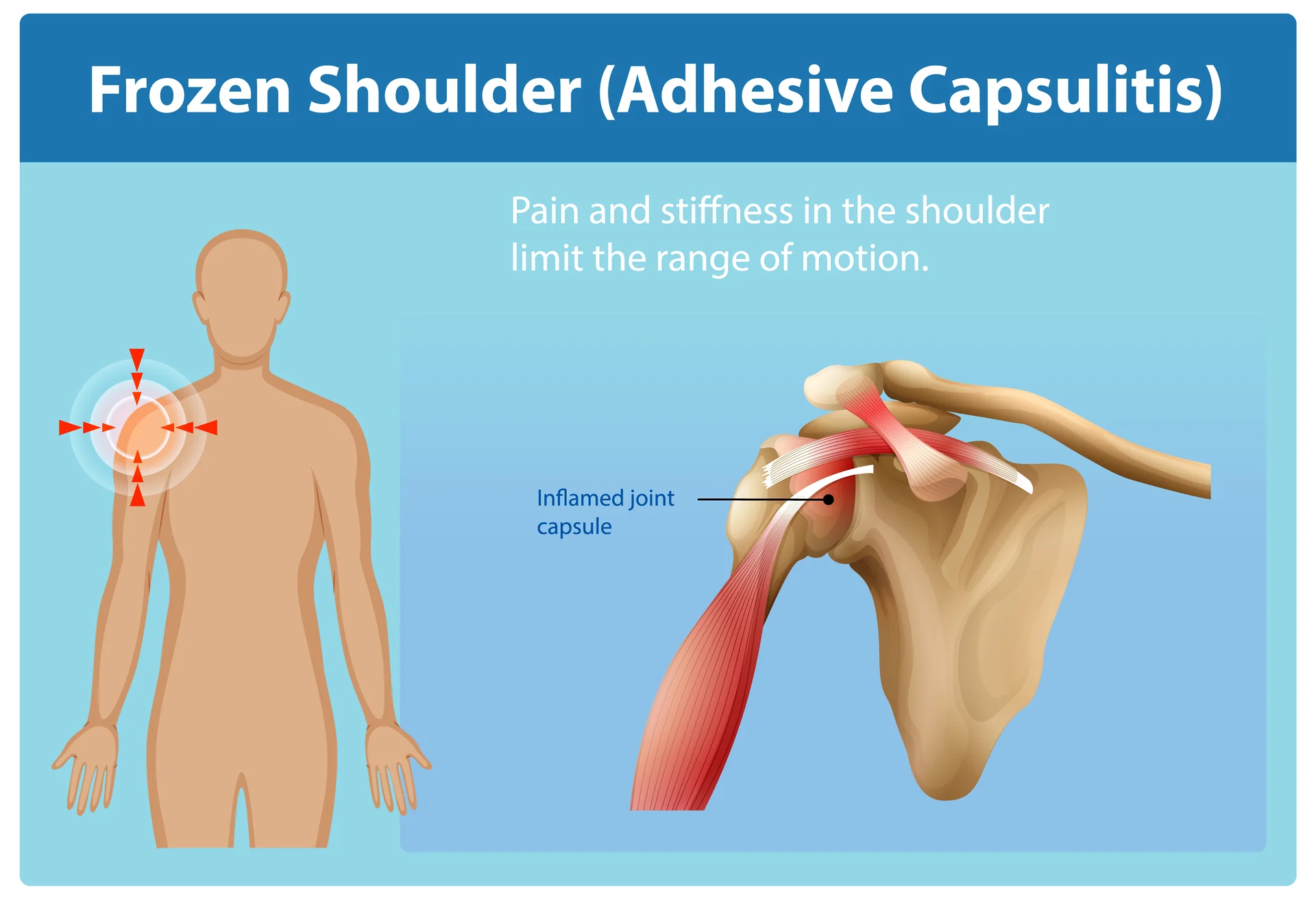
Shoulder pain is a common problem that can affect people of all ages. It may develop suddenly following an injury or gradually due to overuse, inflammation, age-related changes or problems involving the shoulder joint and surrounding soft tissues.
Pain may be felt in the shoulder itself or may extend into the upper arm, neck or upper back.
Diagnosis,
Diagnosis usually begins with a detailed medical history & clinical examination,
Your doctor may assess shoulder movement, strength, tenderness, stability and the specific movements that reproduce your pain.
Depending on the suspected cause, investigations may include:
1. X-ray -
to assess bones, joint space & arthritis
2. Ultrasound -
to evaluate tendons, rotator cuff, bursae & other soft tissues
3. MRI -
to assess rotator cuff tears, labral injuries, cartilage & other deeper structures
4. Blood tests -
when an inflammatory or systemic condition is suspected
Treatment Options,
1. Conservative Treatment
- Activity modification - Reducing or modifying activities that aggravate shoulder pain.
- Pain-relieving medications - Anti-inflammatory, analgesic & antispasmodic medicines having good role in acute stage. They reduce inflammation, pain & spasm in the shoulder, help you to get to the daily routine.
- Muscle strengthening - by Physiotherapy and targeted exercises
- Heat or cold therapy
- Posture and movement correction
2. Interventional Treatment
a. Intra-articular Shoulder Corticosteroid Injection -
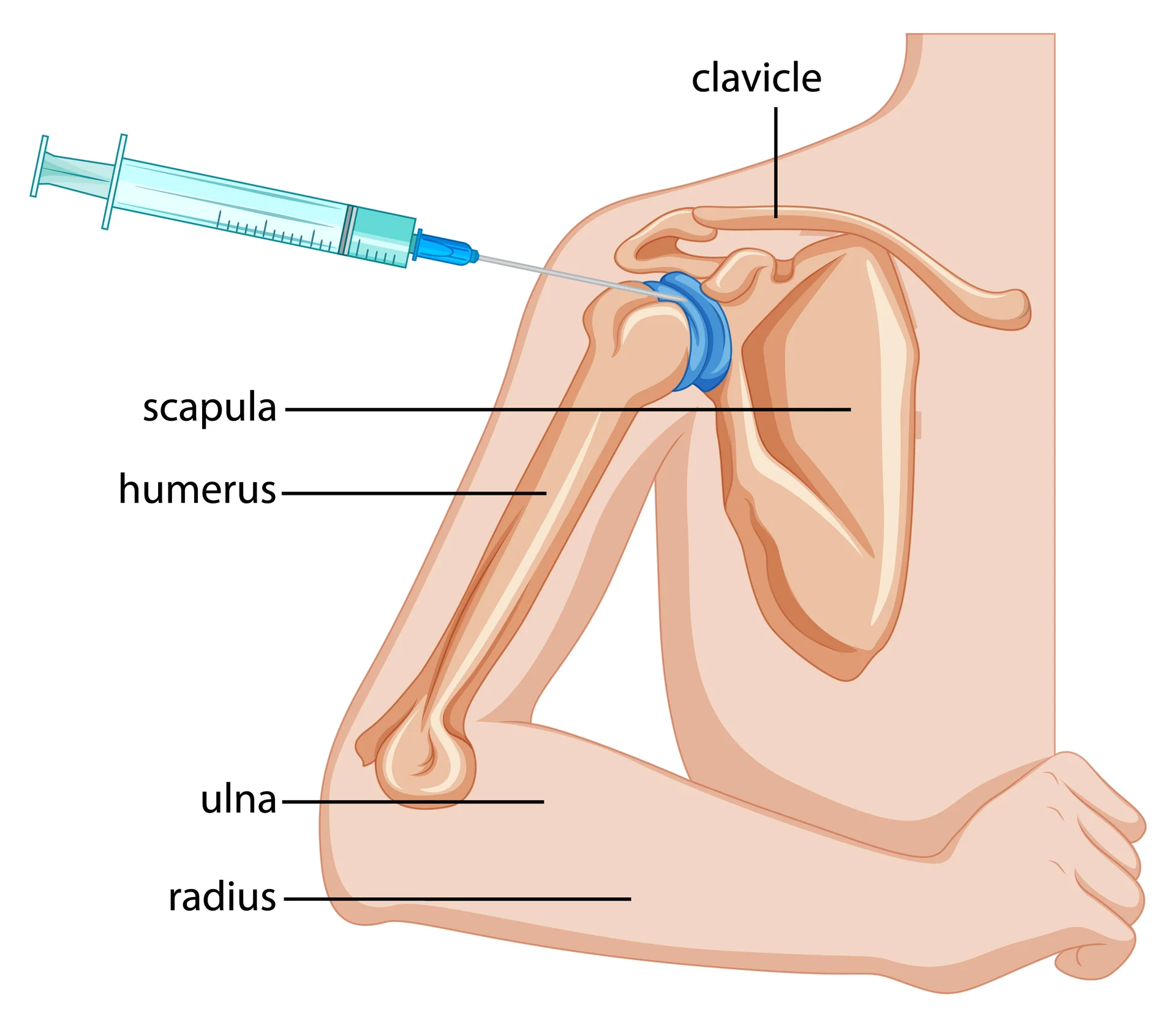
A minimally invasive procedure, delivering a corticosteroid medication directly into the shoulder joint to reduce inflammation and relieve pain. It may be considered for patients with shoulder osteoarthritis, inflammatory arthritis, synovitis, or other conditions causing significant joint inflammation and pain.
The injection is often performed image-guided (C-ARM or IITV) to accurately position the needle within the joint. By reducing inflammation, it can help improve pain, joint movements & day-to-day function.
b. Visco supplementation / Hyaluronic Acid Injection -
A minimally invasive procedure that involves injecting hyaluronic acid (HA) directly into the shoulder joint to improve the joint's lubricating and cushioning properties. It may be considered for patients with shoulder osteoarthritis.
The injection is often performed image-guided (C-ARM or IITV) to accurately position the needle within the joint. It reduces shoulder pain and stiffness. It provides long lasting relief by allowing patients to participate more comfortably in physiotherapy and rehabilitation.
c. Platelet-Rich Plasma (PRP) Therapy -
A minimally invasive procedure, Patient's own blood platelets to support the body's natural healing response. A small amount of blood is collected and processed to separate the platelet-rich plasma, which is then injected into the shoulder joint, usually under image (C-ARM or IITV) guidance.
PRP may be considered for selected patients with shoulder osteoarthritis, particularly mild to moderate disease, and certain tendon or soft-tissue problems. The growth factors and other biological mediators present in platelets may help modulate inflammation and support the local healing environment.
d. Hydro-dilatation -
It is a minimally invasive procedure used to treat severe shoulder stiffness, most commonly frozen shoulder. Performed image-guided (C-ARM or IITV) to accurately position the needle within the joint, doctor injects a mixture of a corticosteroid & a large volume of sterile saline (30-40 ml) directly into the glenohumeral joint space.
This fluid creates high pressure that physically stretches, expands, and breaks down the tight, scarred joint capsule from the inside out.
e. Suprascapular Nerve Block -
A minimally invasive procedure, performed image-guided (C-ARM or IITV) to accurately position the needle, to relieve shoulder pain by injecting medication around the suprascapular nerve, which carries pain signals from a significant portion of the shoulder joint. It may be considered for chronic shoulder pain, frozen shoulder, rotator cuff-related pain, osteoarthritis.
The procedure can help reduce pain, improve shoulder movement and facilitate physiotherapy and rehabilitation.
f. Manipulation Under Anaesthesia (MUA) -
It is a procedure used mainly for severe frozen shoulder with significant stiffness and restricted movement that has not improved adequately with conservative treatment. Under anaesthesia, the shoulder is carefully moved through controlled ranges of motion to stretch the tight joint capsule and improve mobility.
It can help restore shoulder movement and reduce stiffness, allowing rehabilitation to progress more effectively.
At AREVA
At AREVA, we evaluate shoulder pain to identify the cause of discomfort, stiffness and restricted movement. Depending on the diagnosis, treatment may include medication, physiotherapy, image-guided shoulder injections, hydro-dilatation for selected cases of frozen shoulder and suprascapular nerve blocks for appropriate patients. Our goal is to relieve pain, improve shoulder mobility and help patients return to everyday activities with greater comfort.