
Knee Pain & Osteoarthritis

KNEE PAIN
Knee pain is a common problem that can affect people of all ages. It may develop suddenly after an injury or gradually due to overuse, age-related changes or degeneration of the knee joint.
Pain may be felt around the knee-cap, inside or outside the knee, or throughout the joint. Depending on the underlying cause, it may be associated with swelling, stiffness, clicking, instability or difficulty in walking.
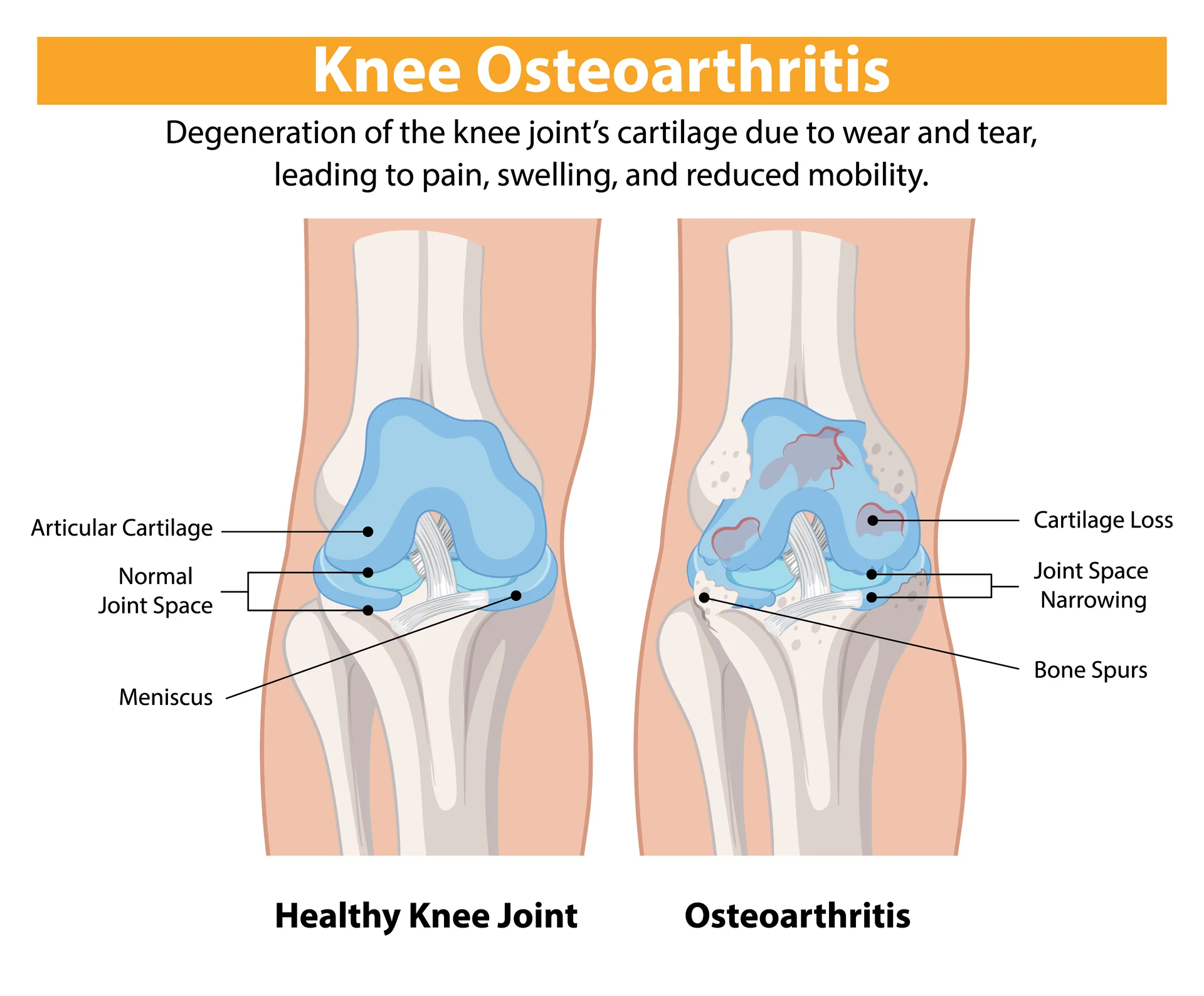
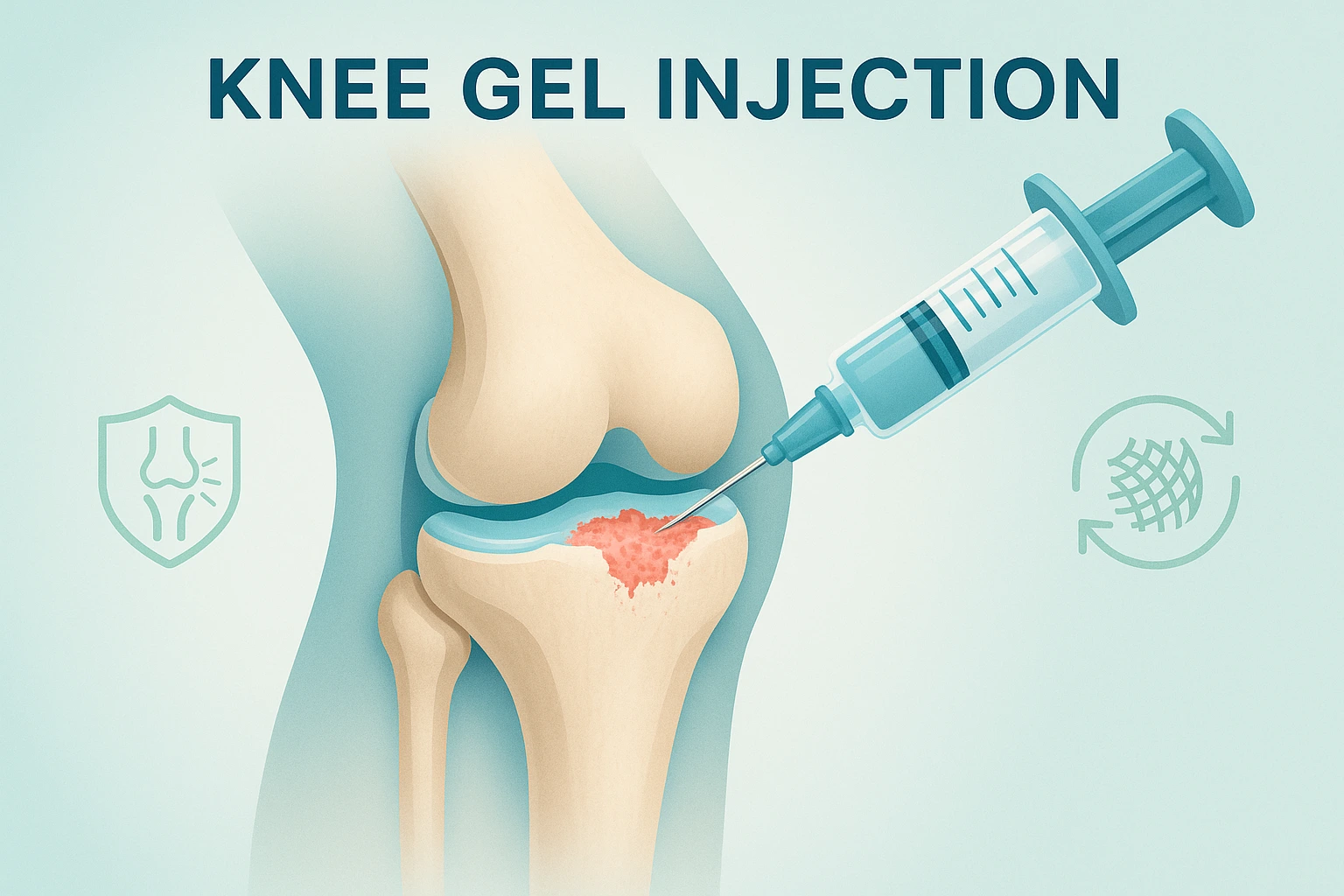
Diagnosis,
Diagnosis usually begins with a detailed medical history & clinical examination,
- Location & nature of pain
- Duration & progression of symptoms
- Previous injuries or surgeries
- Activities that aggravate the pain
- Knee movement & stability
- Swelling & tenderness
- Alignment & gait
- Muscle strength & function
Depending on the clinical findings, investigations may include:
1. X-ray -
commonly used to assess osteo-arthritis, joint-space changes & bone abnormalities
2. MRI -
useful for evaluating meniscus, ligaments & other soft tissues
3. Ultrasound -
useful for selected soft-tissue conditions
4. Blood tests -
when inflammatory arthritis, gout or infection is suspected
Treatment Options,
1. Conservative Treatment
The goal is not only to reduce pain but also to restore strength, mobility and function.
1. Activity modification -
Reducing or modifying activities that aggravate knee pain.
2. Pain-relieving medications -
Anti-inflammatory, analgesic & antispasmodic medicines having good role in acute stage. They reduce inflammation, pain & spasm in the knee, help you to get to the daily routine.
3. Muscle strengthening -
by Physiotherapy and targeted exercises
4. Weight management
5. Ice or heat therapy
6. Bracing or supportive devices in selected cases
2. Interventional Pain Management
For persistent knee pain that does not respond adequately to conservative treatment
1. Intra-articular Knee Corticosteroid Injection -
delivering a corticosteroid medication directly into the knee joint to reduce inflammation and relieve pain. It may be considered for patients with knee osteoarthritis, inflammatory arthritis, synovitis, or other conditions causing significant joint inflammation and pain.
The injection is often performed image-guided (C-ARM or IITV) to accurately position the needle within the joint. By reducing inflammation, it can help improve pain, joint movements & day-to-day function.
2. Visco supplementation / Hyaluronic Acid Injection -
Visco supplementation involves injecting hyaluronic acid (HA) directly into the knee joint to improve the joint's lubricating and cushioning properties. It may be considered for patients with knee osteoarthritis.
The injection is often performed image-guided (C-ARM or IITV) to accurately position the needle within the joint. It reduces knee pain and stiffness. It provides long lasting relief by allowing patients to participate more comfortably in physiotherapy and rehabilitation.
3. Platelet-Rich Plasma (PRP) Therapy -
Patient's own blood platelets to support the body's natural healing response. A small amount of blood is collected and processed to separate the platelet-rich plasma, which is then injected into the knee joint, usually under image (C-ARM or IITV) guidance.
PRP may be considered for selected patients with knee osteoarthritis, particularly mild to moderate disease, and certain tendon or soft-tissue problems. The growth factors and other biological mediators present in platelets may help modulate inflammation and support the local healing environment.
4. Radiofrequency Neurolysis / Genicular Nerve RF Ablation -
Genicular Nerve RFA is a minimally invasive, performed image-guided (C-ARM or IITV) used to treat chronic knee pain by targeting the small sensory nerves around the knee joint called genicular nerves. These nerves transmit pain signals from the knee to the brain.
During the procedure, specialized RF needles are positioned near the targeted genicular nerves using real-time imaging guidance. Controlled radiofrequency energy is applied to reduce their ability to transmit pain signals.
It is considered for patients with chronic knee osteoarthritis, particularly when other treatments failed or not ready for knee replacement surgery or surgery is not possible or pain after knee replacement surgery.
At AREVA
At AREVA, we provide individualized assessment and treatment for knee pain caused by conditions such as osteoarthritis, persistent inflammation and selected soft-tissue problems. Depending on the patient's condition, treatment may include medication, rehabilitation, image-guided knee injections, Visco supplementation, platelet-rich plasma (PRP) therapy and genicular nerve blocks or radiofrequency ablation for selected patients. Our aim is to reduce pain, improve movement and support a more active lifestyle.